
If you have ever looked at a metabolic panel report, you have probably seen two kidney numbers side by side: creatinine, and a figure labeled eGFR. Together they are the standard way routine bloodwork checks how well your kidneys are filtering your blood. But the eGFR is exactly what its name says — an estimated glomerular filtration rate — and a 2026 study comparing estimates against directly measured kidney function is a useful reminder of both its value and its limits.
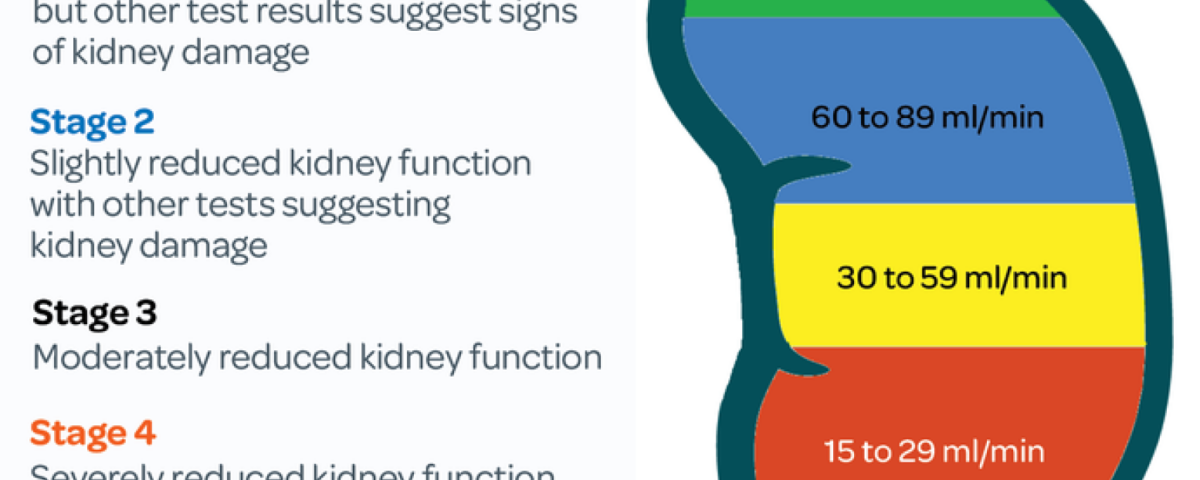
That matters because the eGFR is the main number used to detect and stage chronic kidney disease (CKD). A result below 60 (measured in milliliters per minute per 1.73 square meters of body surface area), sustained over at least three months, is generally the threshold for a CKD diagnosis. Getting that number right — and knowing when it might be misleading — affects who gets flagged for follow-up, who gets referred to a kidney specialist, and how medications are dosed.
What the two numbers measure
Your kidneys filter waste from your blood through tiny structures called glomeruli. The glomerular filtration rate (GFR) is the volume of blood those filters clean each minute. Measuring GFR directly requires injecting a marker substance and tracking how fast it clears from the blood — accurate, but impractical for routine care. So laboratories estimate it instead, using a substance already circulating in your blood: creatinine.
Creatinine is a waste product made by your muscles as they work. Healthy kidneys filter it out at a steady rate, so when kidney function falls, creatinine builds up in the blood. The eGFR takes your creatinine result and converts it into an estimated filtration rate using a formula that also accounts for age and sex. Both numbers appear on a standard metabolic panel, alongside related results such as blood urea nitrogen (BUN), another waste product the kidneys clear.
The catch: creatinine depends on muscle, not just kidneys
Creatinine levels reflect more than kidney function. People with more muscle mass produce more of it, and people with less muscle — including many older adults, people who have lost muscle to illness, and amputees — produce less. That cuts both ways:
- In someone with low muscle mass, creatinine can stay deceptively low, making the eGFR look better than the kidneys’ true function.
- In someone very muscular, or who takes creatine supplements, creatinine can run high and make the eGFR look worse than it is.
Everyday factors can nudge the number too: a large cooked-meat meal shortly before the blood draw, dehydration, intense exercise, and certain medications (such as the antibiotic trimethoprim) can all raise creatinine without any change in the kidneys themselves.
What the 2026 research found
A study led by Edouard L. Fu, PhD, of Leiden University Medical Center in the Netherlands, published in JAMA in June 2026, reviewed data from 6,174 adults in Stockholm, Sweden (median age 59) who had their GFR measured directly — using plasma clearance of iohexol, a specialized marker — alongside the standard creatinine-based eGFR. The researchers compared how well each number predicted death from any cause and kidney failure requiring dialysis or transplant.
Measured GFR behaved as expected: compared with a measured GFR of 90, a value of 60 was associated with a 21% higher risk of death and nearly triple the risk of kidney failure. The creatinine-based eGFR pointed in the same direction, but it underestimated the mortality risk compared with the true measured value (a ratio of hazard ratios of 0.87). In plain terms, relying on the estimate alone made the risk picture look somewhat rosier than it really was. Reassuringly, the findings supported keeping 60 as the threshold for defining CKD — that cutoff held up against the measured GFR.
A second study, presented at ASN Kidney Week in October 2026, shows the blind spot at its sharpest in a group where muscle loss is common. In 1,200 adults with solid tumors, true CKD prevalence by measured GFR was 18.9% — but creatinine-based eGFR put it at only 10.2%, missing nearly half the cases. Among patients whose measured GFR was in the 45–59 range (mild to moderate CKD), 72.1% had a creatinine-based eGFR above 60, which would have been read as normal.
Cancer patients are an extreme case, not the general population. But the lesson generalizes: the estimate is least reliable exactly where muscle mass is least typical.
How to read your own results
A few practical takeaways:
- Know your two numbers together. A creatinine at the high end of the reference range with an eGFR drifting down over several tests tells a more meaningful story than either number on a single day. Trends matter more than one result.
- A result near 60 deserves a repeat, not panic. Kidney disease is defined by persistence. A single low reading can reflect dehydration, a recent illness, a big steak dinner, or a medication, and clinicians typically repeat the test — with CKD confirmed only if the eGFR stays below 60 for at least three months.
- Consider your context. If you are very muscular, take creatine, have lost significant muscle, or have had an amputation, mention it when reviewing results — it changes how the creatinine-based estimate should be interpreted.
- Watch the trend with age. eGFR declines gradually with age even in healthy kidneys, which is one reason a borderline number in an older adult is interpreted differently than the same number in someone younger.
Caveats and limitations
The JAMA study was observational and retrospective, looking back at existing records rather than assigning people to different tests, and its participants were adults in Stockholm, so results may not generalize perfectly to other populations. The cancer study was a conference presentation in a specific, sicker population, so its numbers should not be applied to healthy adults. And no estimating formula replaces direct measurement when precision truly matters, such as before kidney donation or when dosing certain high-risk drugs.
None of this means creatinine and eGFR are bad tests. They are inexpensive, widely available on a standard metabolic panel, and good enough for screening and monitoring in most people — as long as their limits are kept in mind. If your results surprise you or sit near a threshold, talk to your doctor or clinician about what they mean for you and whether a repeat test is worthwhile.
Source: Fu EL, et al. Estimated GFR compared with measured GFR for assessing mortality and kidney failure risks. JAMA, June 2026. doi:10.1001/jama.2026.9639. Presented at the European Renal Association Congress, June 2026.